What industries use collapsible buildings, and why are Chinese manufacturers serving so many of them? The answer depends on more than a fast setup. A useful unit must travel efficiently, fit its site, and perform under real working conditions. A mining crew may need insulated sleeping quarters beside a dusty access road. An event operator may need a clean, bright ticket office assembled before the first visitors arrive. Different work. Different demands.
Construction, energy, agriculture, tourism, and logistics are common users. Their needs vary sharply. A farm may prioritize washability and ventilation, while a remote maintenance team may care more about durable flooring, storage, and reliable power connections. Buyers should examine frame materials, panel thickness, roof drainage, transport dimensions, and the assembly process. Photos help, but they do not replace specifications or a clear installation plan. Some product pages make performance sound effortless; real sites rarely are.
Ryan E. Smith, a professor and researcher known for work on offsite construction, is a relevant expert for this discussion. However, no verified, topic-specific quotation from him was provided for this introduction. A direct quotation should be checked against its original source before publication; inventing one would weaken the article’s credibility. The sections ahead will compare use cases and explain what buyers should assess when choosing collapsible buildings made in China. The practical question is not simply which industry uses them. It is whether a building’s design matches the site, climate, crew, and intended duration of use.
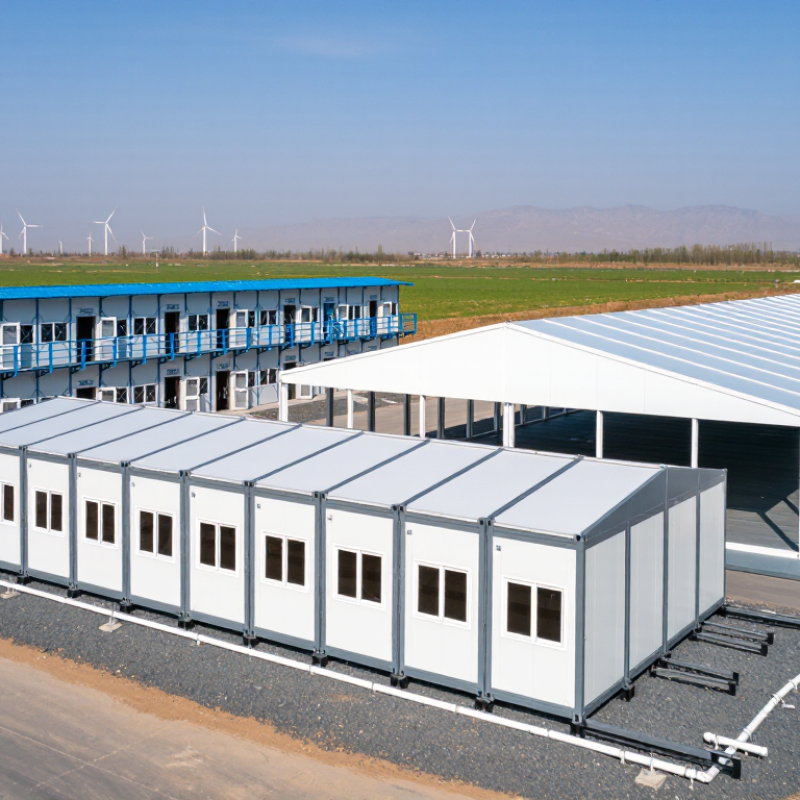
A collapsible building is a structure designed to fold or pack into a smaller transport form, then deploy on site. “Collapsible” alone says little about performance. Measure the packed dimensions, setup time, crew size, and number of reuse cycles. Check the frame, joints, and anchors against local wind, snow, and floor-load conditions. Look closely at seals around doors and roof edges. Small gaps matter. So do clear assembly instructions.
Evaluation should also cover thermal performance, fire safety, ventilation, and maintenance access. A 2019 modular-construction analysis by McKinsey reported potential project-time reductions of 20–50%; that finding concerns modular construction broadly, not every collapsible unit. Treat it as context, not a guarantee. UNEP’s 2024 Global Status Report for Buildings and Construction estimated that buildings and construction used 32% of global energy and produced 34% of global CO2 emissions in 2023. That makes insulation and material durability relevant evaluation criteria. Ask for test records, not just product claims. A practical site trial can reveal awkward latches or slow connections. Some assessment remains imperfect: real weather and repeated handling may expose weaknesses that a brochure cannot.
On Chinese construction and infrastructure sites, collapsible buildings provide quick-use space that can move as work progresses. Road upgrades, bridge repairs, rail projects, and utility works may need temporary offices, meeting rooms, lockers, or rest areas close to changing work fronts. Folded units can reduce transport volume, while hinged panels and bolted frames help crews assemble them on prepared ground. That saves trips.
A 2019 McKinsey analysis estimated that modular construction can deliver projects 20–50% faster and reduce costs by up to 20% in suitable cases.
These figures cover modular construction broadly, not collapsible buildings in China specifically. Not a guarantee.
For contractors, the practical test is whether a unit can be moved, anchored, and reused without compromising safety or comfort. Inspect lifting points, frame joints, weather seals, and floor stability before deployment. On a muddy roadside site, poor drainage can leave even a well-made unit damp and difficult to use. This detail is easy to underestimate. A tighter schedule may justify rapid installation, but crews still need clear access, ventilation, and reliable power. The McKinsey figures are useful context, yet site conditions, transport distance, and repeated assembly can change the economics. Teams should record setup time and repair needs across projects; otherwise, “reusable” may remain an assumption.
China’s mining operations often work far from permanent facilities. Collapsible buildings can provide equipment storage, maintenance bays, site offices, and rest areas. Their transport-friendly sections can simplify delivery to remote locations, where roads and lifting capacity may be limited. Once assembled, buildings need suitable foundations, weather protection, ventilation, and clear access for machinery. Dust gets everywhere. A design that works on paper may need adjustments after the first harsh season.
Energy projects use these structures for control rooms, staff facilities, and temporary storage near construction or service areas. Insulation, fire-resistant materials, cable routing, and dependable ventilation deserve careful review. Industrial sites may also use modular workshops or inspection rooms, but dimensions must match actual equipment and workflow. Measure door openings and turning space before ordering. A practical limitation is that repeated relocation can cause wear, especially around joints and lifting points. No layout is perfect. Site conditions matter more than a standard floor plan.
Tips: Ask for structural and material specifications, then compare them with local wind, snow, and temperature conditions. Check assembly requirements, drainage, and utility connections before delivery. Keep access routes clear, and inspect fasteners and seals after installation. A small detail, such as a poorly placed service door, can slow daily work.
Across China’s agricultural regions, collapsible buildings can provide covered space for equipment, feed, or seasonal packing. A unit placed near fields may reduce the distance workers carry crates after harvest. Wide doors help tractors and pallet carts move through, while washable interior surfaces make cleanup easier. That matters. Yet exposed sites need careful anchoring, drainage, and ventilation; a low-cost structure can become uncomfortable in heat or noisy rain.
Warehousing operations use these buildings for overflow stock, temporary sorting, or sheltered loading areas. In logistics yards, a covered space can protect parcels and packaging from sun and showers while teams prepare outgoing loads. Modular layouts also let operators adjust space when demand changes. Not always. Repeated assembly still takes labor, and frequent relocation may wear connectors or seals, so inspections should be part of routine planning.
The best choice depends on local weather, ground conditions, storage loads, and how often the building will move. Buyers should check rated wind and snow capacity, fire performance, ventilation, and maintenance requirements against the actual site. I would not assume “collapsible” means effortless or suitable for every farm or depot. A trial installation can reveal practical issues, such as forklift turning space or water collecting beside the entrance.
Standard freight-container footprints provide a practical modular-space reference for agricultural storage, warehouse overflow, and logistics staging.
Footprints are calculated from nominal ISO freight-container external dimensions (2.438 m wide). They are reference values, not universal collapsible-building sizes. Actual usable floor area depends on the structure and configuration.
In China, collapsible buildings can support emergency teams when floods, earthquakes, or other disruptions overwhelm fixed facilities. A temporary unit can serve as a triage room, registration point, or supply station. UNHCR’s Emergency Handbook recommends at least 3.5 square metres of covered living space per person in many emergency settings. That benchmark makes floor area more than a design detail. Clear walkways, washable surfaces, ventilation, and secure anchoring matter too. Setup speed matters, but rushed installation can create problems.
Events need a different kind of flexibility. Exhibition organizers may use temporary buildings for ticketing, staff rooms, storage, or first-aid services. The Events Industry Council and Oxford Economics estimated that business events generated 10.9 million direct jobs and 1.6 trillion US dollars in direct GDP worldwide in 2019. Those figures show the sector’s scale, not a guarantee that every event needs temporary space. Still, a building that can be moved between venues may help manage changing layouts. It must also handle crowds, rain, and repeated assembly. Not always easy.
Public services can use collapsible units as temporary clinics, community desks, or classrooms during renovations and service surges. UN DESA’s World Urbanization Prospects projects that 68% of the global population will live in urban areas by 2050. Growing cities may need flexible service space, though local demand varies widely. A temporary building is not a substitute for durable infrastructure. It can, however, keep a basic service accessible while permanent facilities are repaired or expanded. The weak point is often overlooked: maintenance after deployment.
They can serve as equipment stores, maintenance bays, site offices, or rest areas. Transport-friendly sections may help when roads and lifting capacity are limited. Dust gets everywhere.
Review foundations, drainage, ventilation, weather protection, and utility connections. Compare material specifications with local wind, snow, and temperature conditions. Check access routes, too.
It may provide a control room, staff space, or temporary storage near service areas. Review insulation, fire-resistant materials, cable routes, and ventilation. Details matter.
Measure equipment, door openings, and turning space before ordering. A standard floor plan may not match the real workflow. That is easy to miss.
A unit can serve as a triage room, registration point, or supply station. In many emergency settings, plan for at least 3.5 square metres of covered living space per person. Keep walkways clear and surfaces washable.
Temporary units can provide ticketing, staff rooms, storage, or first-aid space. Check crowd flow, rain protection, and setup needs at each venue. Repeated assembly can wear parts.
They may provide temporary clinics, community desks, or classrooms during renovations or service surges. They can keep basic services accessible, but they do not replace durable infrastructure. Maintenance still matters.
Collapsible buildings are structures designed to be transported, assembled, expanded, and relocated more easily than conventional buildings. Their value depends on factors such as durability, setup time, adaptability, transport requirements, and suitability for local conditions. Understanding what industries use collapsible buildings means looking at how different sectors need flexible space without lengthy construction.
Construction and infrastructure teams can use them as temporary offices, worker facilities, or equipment storage. Mining, energy, and industrial operations may benefit from practical on-site shelters and support spaces in remote locations. In agriculture, warehousing, and logistics, collapsible buildings can provide adaptable storage and working areas as needs change. They can also serve emergency response teams, public services, and event organizers that require facilities to be deployed quickly and used for a limited period. Across these applications, the best option is one that balances reliable performance with efficient installation and the specific demands of its intended use.

Estable Living